The simply explanation of Leukemia is white blood cancer. It character is an abnormal proliferation in the blood cells, commonly only in white blood.
Leukemia leads to a decrease in white blood cells in the body's system. Leukemia can be treated by ensuring that the body increases the white blood cell count. Leukemia can be treated simply by using the same methods used for the treatment of cancer.
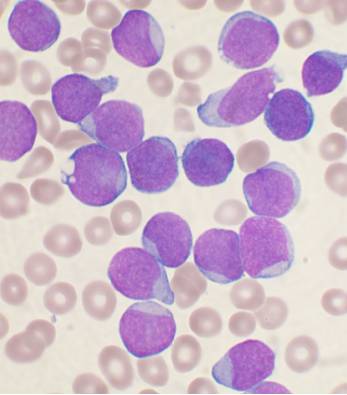 Acute leukemia
Chemotherapy is one such way, but this may require too much time. The fact is that treatment with this method, a minimum period of two years. Another way to treat the disease is by determining the bone marrow problems. This method is expensive and is done in a very limited number of countries, since the use of advanced instruments and experienced doctors.
Replacement of the infected bone marrow with healthy is what it means. A radiation therapy is also recommended but this must go hand in hand with chemotherapy. Radiation does give doses of x-ray a couple of months.
 Leukemia blood cells
In cases where there is overproduction of white blood cells, some blood infections. This can lead to blood diseases, and therefore become necessary for the use of antibiotics to combat the problem.
If leukemia is in early state, a prolongation of survival with active immunotherapy. This is still experimental, as reported by the Leukemia Society of America. Leukemia is a chronic problem and the treatment is not a question of a short time. Patience is essential. Cases of complete eradication of the above methods have been reported in the world.
It seems a little "more people are diagnosed with colon cancer in those days. Maybe has to do with the aging population, but probably a lot of motivation and behavior. Another condition appears to grow is constipation, which over the years cannot be good. If we want discuss the best treatment for cancer of the colon, we must go further than the worst of them also.
 Colon Cancer Treatment
Put your hand if you have heard of these ... chemotherapy, radiotherapy and surgery. It is true. This means that the best treatment for cancer of the colon is, you guessed, all natural.
Look what logically for a moment. If you have colon cancer is your goal is to leave and to restore your health. How in the world expects to realize that the pumping of toxic chemicals in the blood? O Zappa with radiation from the body? Or by cutting your parts of your intestines and colon? These are there for a reason. And we are not supposed to avoid radiation, because it causes cancer? The whole system is upside down. With the exception of large pharmaceutical companies that making billion dollar profits from the commercialization of these treatments. This substance can be for another time.
 Colon Cancer Treatment
We are talking about all natural, non-toxic treatments that will reverse your cancer of the colon and restore health. There are some circumstances in which he lives to cancer. Cancer loves low oxygen and high acidity levels. And a chronic dehydrated body and weakened immune system. It’s a toxins and free radicals. He loves sugar. And colon cancer in particular, must really love the toxic mess left years of constipation.
Your body wants to be in balance. If you can find natural treatments designed to reverse the conditions that we have just said, it will also be your way of a colon cancer free. Do not leave that up to some doctors who have no other choice than to shoot drugs and surgery. Discover a world of opportunities. Your body deserves the best.
Article source: ezinearticles.com | write by : Joshua McCarron
As a layman has never show me how the process of the Chemotherapy is done. According to Joel W. Goldwein, MD & Carolyn Vachani, who once wrote at www.oncolink.org that Chemotherapy can be done in several ways.
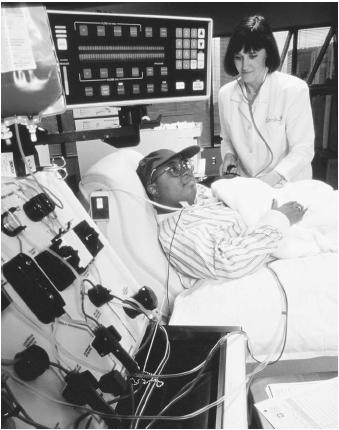 chemotherapy
- For oral (by mouth, in the form of a pill)
- Street intravenously (IV via a vein, as a short infusion or continuously for one or more days)
- As an injection or needle
- Direct in a hole (e.g., bladder, abdominal cavity)
- In the arterially (in special cases, as part of the perfusion treatment of malignant melanoma)
Doctors often combine specific and non-specific chemotherapies so that they complement each other and work together. This combination of different drugs is called a "regime". These systems are often based on first letter of the names of the medicines used in them. For instance, CHOP, a common lymphoma consisting of cytoxan (cyclophosphamide), Adriamycin (hydroxydoxorubicin), oncovin (vincristine) and prednisone. This combination is available in "cycles" (blocks of time). For example, a cycle of 21 days may be used, and in the case of CHOP, cytoxan, Adriamycin and oncovin given on day 1, prednisolone 1-5 days followed by 16 days rest (no treatment), for a total of 21 days and then starts again with the next stage.
 chemotherapy after surgery
Chemotherapy is a systemic therapy, meaning that it travels throughout the body, unlike surgery or radiation, as "local" treatments. Doctors also use terms to describe when chemotherapy is the sequence of operations:
- Adjuvant therapy: treatment after surgery to reduce the risk of cancer returning.
- Neo-adjuvant therapy: therapy given before surgery to reduce the tumor, then surgery to become more effective.
- Co-treatment: When 2 or more treatments are given together, such as chemotherapy and radiation.
Source: www.oncolink.org
Related articles: The basic of Chemotherapy
Chemotherapy is a form of treatment usually for cancer. To understand how the Chemotherapy works, we need a little understanding of tumor cells. The tumor consists of a cell that reproduces an exceptionally high speed. Normal cells know to stop reproducing (or dividing) when in contact with other cells. When a tumor, this stop mechanism is missing, causing cells to continue dividing over and over again. RNA or DNA in a cell is like saying to reproduce, and chemotherapy works by destroying the RNA or DNA. The faster the cancer cells are replicating, chemotherapy is more able to kill cells.
 Chemotherapy
Cell replication occurs in a series of steps, called the cell cycle. The cell cycle phases are: resting (G0, nothing happens), G1 (or gap 1, a phase of growth), S (synthesis, DNA replication occurs), G2 (gap 2, another growth) and M (mitosis, effectively from 1 division of cells in 2).
 basic of Chemotherapy
Some chemotherapeutic agents are able to kill a cell during each phase of the cycle (These are called cell-cycle non-specific), others are just dead for a certain phase and cannot operate in a dormant phase (the so-called cell-cycle specific). Give the cell cycle specific agents for different times, may reach the maximum number of cells that are particularly affecting.
 After Chemotherapy
These are more effective when given in divided doses (over several days or times, for example, once daily for 5 days or every three hours for 4 doses) or by continuous infusion. Cell-cycle nonspecific drugs act against cancer cells at any stage of the cell cycle, including the stage of rest. Cell-cycle nonspecific drugs are most effective when given in bolus doses (e.g., more than 20 minutes once).
This article writes by Joel W. Goldwein, MD & Carolyn Vachani, RN, MSN, AOCN
The Abramson Cancer Center of the University of Pennsylvania ---www.oncolink.org---


