Treatment of lung cancer depends on several important factors. The main factors are the histopathologic (diseased tissue) type of lung cancer and stage of cancer.
When the stage of lung cancer is determined, the oncology team and patient work together to develop a treatment plan. It is important for lung cancer patients to discuss the value of different forms of treatment with their doctor. Other factors that affect lung cancer treatment is the patient's general health, medical conditions which may affect (eg, chemotherapy) and tumor characteristics.
The characteristics of lung tumor can be used to break up patients into two groups: patients with low risk of cancer recurrence and patients with high risk of cancer recurrence. Disease-specific prognostic prognostic factors used for patients in one of these groups. In particular, the histopathologic groupings of small cell lung cancer (SCLC) and non-small cell lung cancer (NSCLC) can be used to better predict the patient's prognosis and expected response to treatment.
 Treatment of lung cancer
Surgical resection (cut) in the tumor generally is indicated for cancer that has spread outside the lung. Surgery for lung cancer can be performed using different techniques. Thoracotomy, running thought the chest wall, and the median sternotomy, performed by cutting through the sternum, are common methods used for lung cancer surgery.
Alternative approaches include anterior limited thoractomy (ALT), which runs on the front of the chest with a small cut, anterioraxillary thoracotomy (AAT), which runs on the front near the chest and forearm posterolateral thoracotomy (PLT), which is performed on the back / side of the trunk .
 characteristics of lung tumor
ALT, in particular, is less invasive than standard thoractomy-that this procedure involves less disruption in the body than large incisions or other intrusive measures. ALT may result in less blood loss during and after surgery, less postoperative drainage, and less postoperative pain than standard thoracotomy.
Photodynamic therapy (PDT) that is often used to treat lung cancer it seem unusable. Photodynamic therapy with injection of a light-activated drug (eg photofrin / polyhaematoporphyrin, Lumina). Then, during bronchoscopy (examination of the airways using a flexible scope), the lung tumor is illuminated by a laser fiber that transmits light of a certain wavelength. At the time, laser light is used to destroy the sensitized tumor tissue. Photo Skin sensitization (light sensitivity) is a side effect of PDT.
Radiation also can cause the following:
• Anorexia (loss of appetite)
• Changes in taste perception
• Damage to the fetus (in women who are pregnant)
• Increased heart rate (tachycardia)
• Increased risk for infection
• Malaise
• Nausea
• Vomiting
The damage of the lungs exposed to asbestos called mesothelioma cancer. The most difficulty from this disease is finding the early symptom. There may be many years before you know you have it. Read on to find out what you can do as an alternative for treatment and prevention of this deadly disease.
It’s a good idea to learn anything about the preventive treatment if you have any doubt that exposure to asbestos in the past. Do not wait until you see the symptoms, prevention start now!
Two important things to do:
Use Nutrition - supplements used to help the body. First, they contribute to the growth of healthy cells, suppression of mutant cancer cells. Second, it’s also known to help remove the body of toxins and excess fluids, this reduces the pressure on the chest and intestinal cavities reduce pain and discomfort.
 lungs cancer detail
Immune - therapy augmentive – this mostly effective method at the early stage. This treatment uses drugs that strengthen the immune system that is capable of tumors. Your body can heal itself naturally. So far, this treatment less effective in later stages of the disease. The scare of your lungs bags of asbestos, it is leading to degradation in time. Like all other diseases is early detection can save your life. Other thing that can only worsen the problem is fear.
Your best defense against the fear is knowledge. Fear is not a solution to your problem will only get worse and drain your energy. There is enough information there for you to read, use the energy you need to understand what you are against.
There are never guarantees, but one thing is certain, if you let fear take over you can almost certainly will win.
Get more information about this topic from a site Monitor Cancer. It is time to take back your health. It is time to enjoy life again and it is your time to find out about all the choices you have for good health.
The disease is considered one of the most serious, because it has thousands of lives in the U.S. alone per year. While scary, this should be enough of a reason to warn themselves in terms of evidence of stomach cancer symptoms. It is the second most common type carefully behind zeros lungs race.
Most symptoms are actually very similar to that of a hiatal hernia or ulcer. It can start with only abdominal pain aggravated by food, together with heartburn, indigestion and nausea. Sure, by now, most of these symptoms can be easily dismissed, and sometimes may be overcome by a fruit salt. The only bad news is that this type of reaction leading to the postponement of a routine check, and the tumor to chaos.
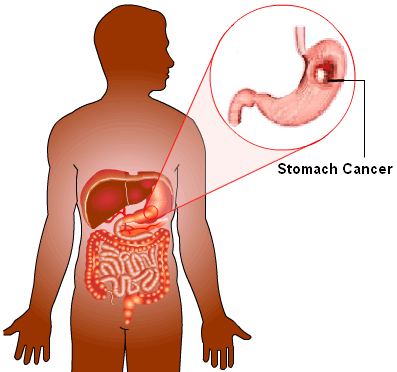 Stomach Cancer info
A loss of appetite or feeling full even after a small meal can also be placed in the stomach symptoms. Besides this can upper abdominal pain, weight loss, and the actual bloating in the stomach after meals. In more extreme cases, vomiting of blood and blood in stool may also occur. This is often not the rich red color of fresh blood, but dark blood. If left in a certain time, this can lead to anemia.
 Symptoms of Stomach Cancer
Although some of these symptoms can also be symptoms of a stomach virus or stomach ulcer, if you even the slightest feeling that the cancer can go to your doctor. This requires an examination of both a gastroenterologist and an oncologist.
The risk of acquiring these stomach symptoms are significantly higher when things such as age start to factor in. This disease is more common in people close to the age sextioo. Men and women can also record that men are more likely to develop it than women. A diet consisting mainly of salty foods prepared by smoking or curing is also something to take off. Smoking can also lead to it because every time you breathe, you finally swallow a small amount of smoke.
article source: ezinearticles.com
Lung cancer is a disease of uncontrolled growth of damaged cells in the tissues of the lungs. This growth can be shared with other agencies, adjacent or non-adjacent tissues beyond the lungs. Lung cancer is one of the most cancer-related deaths in both men and women, is responsible for 1.3 million deaths each year in the world. In 2008, according to estimates from 1961. 840 Americans expected to die from lung cancer, accounting for about one third of all deaths from cancer.
More women have died each year from lung cancer in breast cancer since 1987. After several years of increase, a female mortality from lung cancer is now in a plateau and become the second most common cause of death after breast cancer. From 1990-1994, the mortality rate among men fell by 1.3% per year. Both indicators are good signs of a reduction of smoking in the last 30 years in both men and women.
Just a little more than 215,000 new cases of lung cancer, is an estimate of 15% of all cancers diagnosed in 2008. In the treatment, lung cancer is classified as small cell or non-small cell. These cells are treated differently. The treatment varies depending on the type of cells and stages of cancer. Methods of treatment can include one or a combination of chemotherapy, radiotherapy, surgery and biological treatment. Since the cancer has usually spread by the time it is discovered, radiation and chemotherapy are often used and, if necessary, in combination with surgery.
 Lung Cancer
Common lung cancer symptoms may include shortness of breath, persistent cough or coughing blood, chest pain, voice changes, weight loss and recurrent pneumonia or bronchitis. Cigarette smoking is undoubtedly the biggest risk factor for lung cancer. The risk increases with the amount and duration of cigarette smoking. There are many cancer causing chemicals in tobacco smoke. Smoking cigars and pipes also cause lung cancer, but not at high risk such as cigarette smoking. Passive smoking, occupational or environmental exposure to radon, asbestos and certain metals such as chromium, cadmium and arsenic, are risk factors for lung cancer. Genetics play an important role in development of the disease, especially in those with disease at a young age.
Early detection has been shown to reduce mortality. Chest and bronchial passages Fiber optics is not as effective in reducing deaths from lung cancer. Between 2000 and 2003, 1 year’s relative survival has increased to 41% compared to 35% during 1975 - 1979 periods. But only 15% of all patients who survive more than 5 years than in all stages of cancer combined.
Live well, eat healthy, exercise, stay optimistic, do not ever smoke or stop smoking to prevent cancer in the first place.


